
Apple's New CEO Doesn't Do AI. That's Exactly the Point.
FatCatValue | Thinking Notes

Everyone expected Apple to hire an AI chief to fix the narrative.
Instead they picked a guy who’s been building iPhones for 25 years.
That choice says more than anything Apple has shipped in the last two years.
Timing: Cook doesn’t walk away mid-hand
Monday afternoon, Apple announced Tim Cook steps down September 1 and transitions to executive chairman. John Ternus takes over as CEO. Ternus is 51, an SVP of hardware engineering, and a quarter-century Apple lifer.
The Street had basically one complaint about Apple over the past year: late on AI. Apple Intelligence has slipped. Siri’s upgrade keeps getting pushed. In 2025 the stock trailed Meta, Microsoft, and Google by a wide margin. The drumbeat was that Apple missed the wave.
The script said Cook either dug in or got pushed out. He picked a third option: hand over before June’s WWDC, on his own terms.
Timing matters. A 65-year-old CEO who took the company from $350 billion to $4 trillion doesn’t voluntarily leave when he thinks the hard part is still ahead of him.
If Cook is comfortable handing over now, the call he agonized over—what Apple’s AI strategy should actually look like—has been made inside the building.
I don’t know what the call is. But the timing itself is the signal.
The choice: Apple didn’t poach an AI star. They picked a hardware guy.
Ternus wasn’t hired from OpenAI. He wasn’t hired from Google. Penn mechanical engineering in 1997. Apple in 2001. That’s the resume.
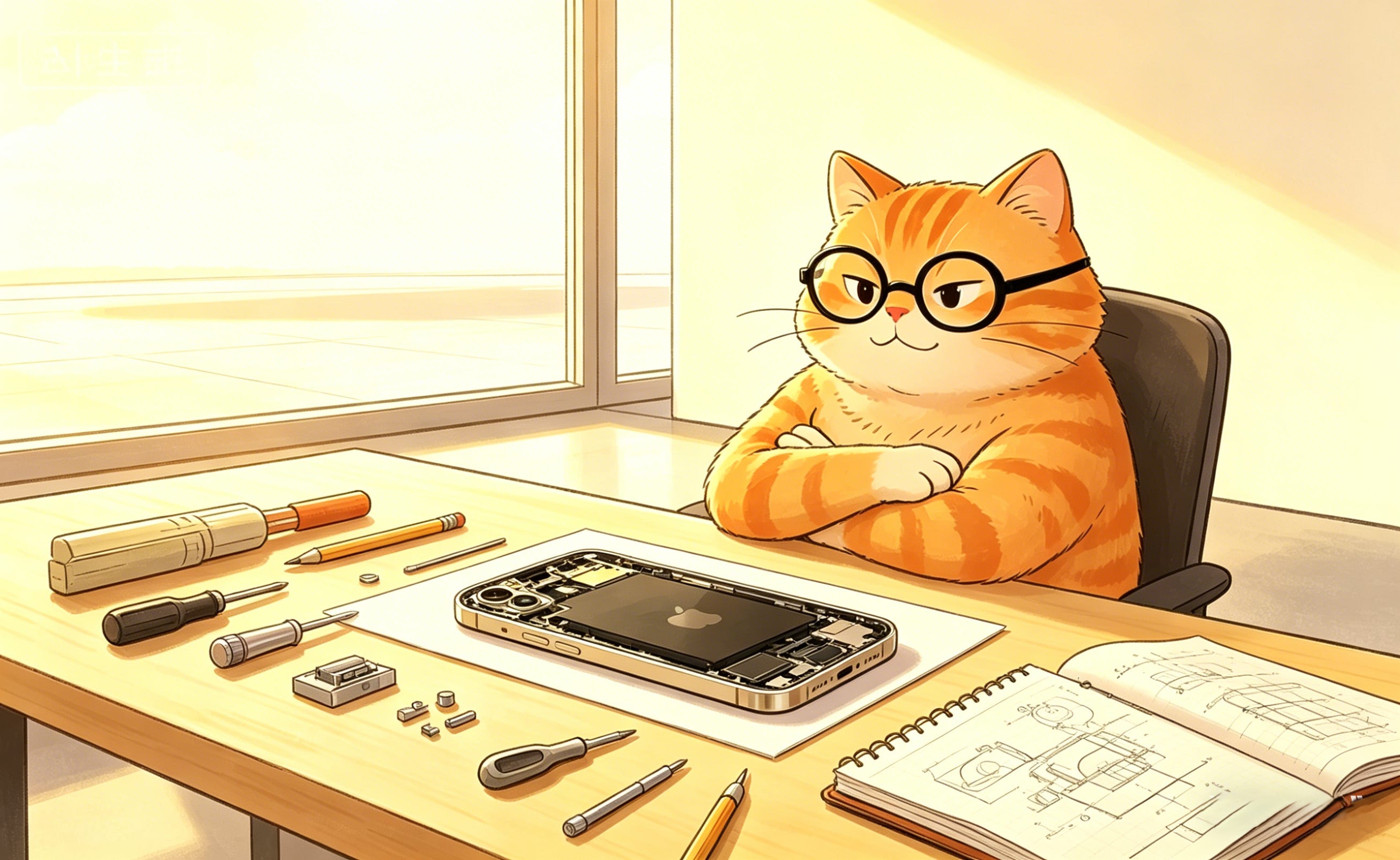
No “Transformer,” no “foundation model.” Just iPhone, iPad, Mac, AirPods, Apple Watch, Vision Pro. Essentially every physical thing Apple ships.
Putting a hardware engineer on top during an “AI panic” moment isn’t default. It’s a strategic statement.
My read: Apple knows it isn’t going to win the model race. OpenAI, Anthropic, Google, and xAI are already fighting for that ground. Apple can’t enter that fight at scale, and probably shouldn’t try.
What Apple can do is own the screen, the glasses, the watch, the earbuds. The device every model eventually has to run on or through.
Anyone can train a model. Not anyone can design an iPhone for a decade while holding the supply chain together. Apple Silicon’s efficiency, the AirPods ecosystem lock, the Vision Pro manufacturing moat—those are real and defensible.
Picking a hardware CEO says: we fight on ground we actually hold.
Is it a good choice? I’m not sure.
Let me be honest about the risks.
First, Ternus hasn’t been public-facing under pressure. Cook was a supply chain savant but also a real PR operator. I’ve never seen Ternus carry an earnings call on his own. That’s a skill you learn by doing, and doing it at Apple scale is brutal.
Second, if the AI endgame is “one great model plus any screen” rather than “hardware-bound experience,” Apple is on the wrong side of the bet. That scenario isn’t low-probability.
Third, creative output. Cook’s Apple had wins (Apple Silicon, AirPods) and flat moments (Vision Pro, at least so far). Ternus has to deliver genuine new categories. Glasses, foldables, something else. Past success doesn’t auto-renew.
Here’s what I do believe: Apple isn’t a savior-CEO company. It’s a system. Cook didn’t have Jobs’s taste but he built a $4 trillion machine. Handing the keys to someone who grew inside that engineering culture is continuity, not rupture.
Translation: short-term stock volatility as the sentiment crowd trades uncertainty. Long-term, this looks more like a planned relay than a crisis swap.
How I’m reading the stock
AAPL closed around $269.54 on announcement day, down roughly 1% intraday, and recovered a bit after hours. Tamer than I would’ve guessed.
I’m not buying or selling on this news. Apple’s valuation thesis didn’t change. The 34x P/E rides on services growth and device ecosystem stickiness. Neither breaks because of a CEO swap.
What I’m actually watching:
June WWDC — Ternus’s first big public moment. Is the AI roadmap articulated?
September event — new product categories? Foldable? Glasses?
Next earnings call — how does he handle AI questions live?
Those will tell you what Cook left him and what he plans to add.
The real lesson
We grade companies by numbers. Revenue growth, margins, multiples. But sometimes the loudest signal a company sends is who it trusts with the keys.
Great companies don’t run on CEO genius. They run on systems that train people and push decisions down. Apple choosing a 25-year insider over an outside star isn’t boring. It’s quiet confidence that the system matters more than the person.
Is that belief right? Ten years will tell. But Cook handing over now means he believes it.
Subscribe to FatCatValue if this is your kind of thinking.
@FatCatValue